

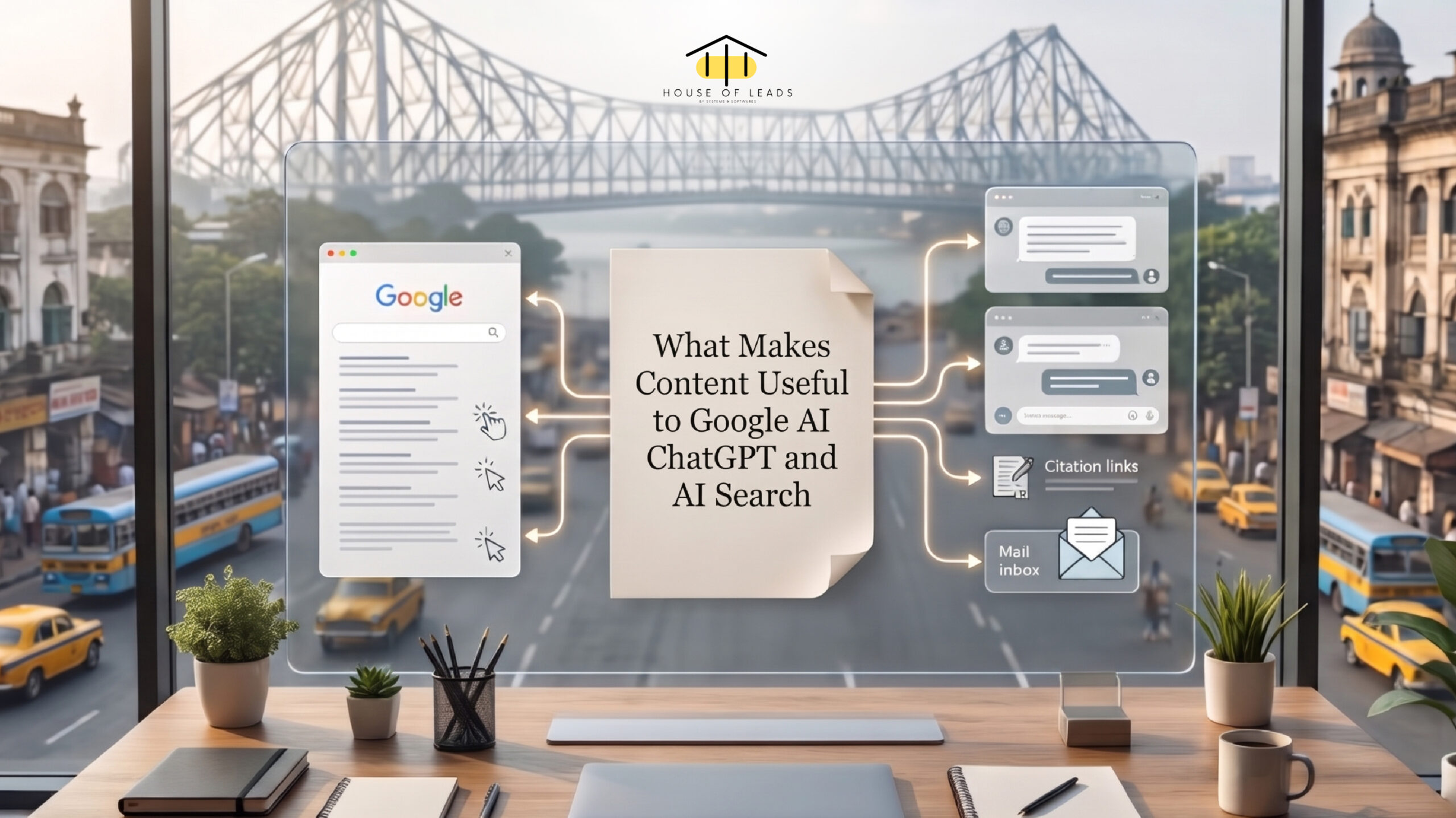
What makes content more useful in AI search
Content is more useful when it answers a specific question, identifies the business or subject clearly, supports factual claims and can be accessed by relevant search systems. Original examples, transparent pricing and documented methods give readers information they can assess. These qualities support credible content, but cannot guarantee an AI citation.
For an Indian business, the opportunity is practical. Customers may ask an AI tool to compare agencies, explain costs or recommend what to check before buying. Your website should contain accurate information that helps answer those questions, alongside pages explaining the services you actually provide.
Writing “best agency in India” repeatedly does not provide much evidence. Explaining the scope, people, price basis and relevant work gives a prospective buyer more to evaluate.
Understand SEO AEO and GEO before changing your content
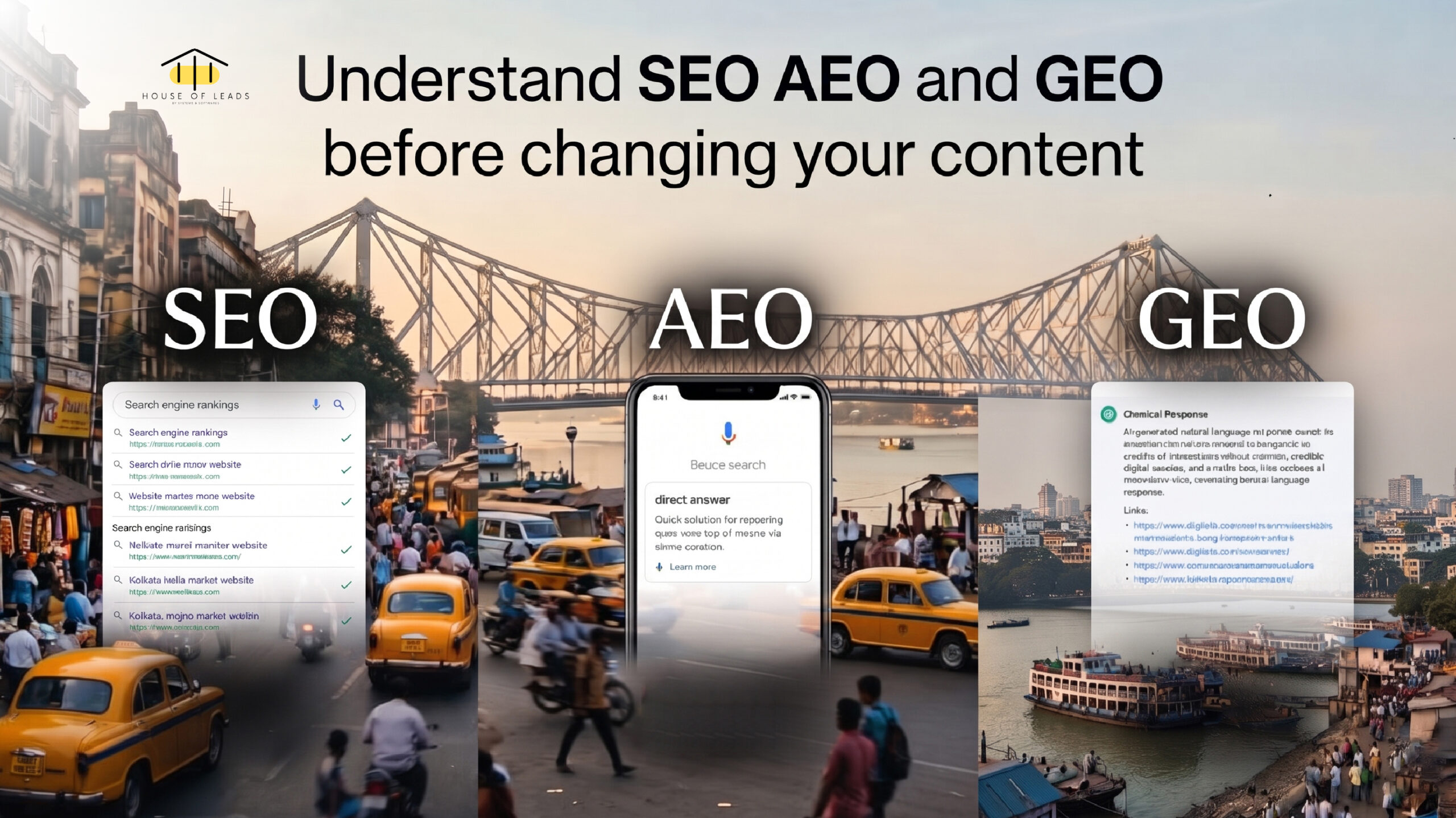
SEO concerns discovery in search. AEO, or answer engine optimisation, is commonly used for making answers clear and accessible. GEO, or generative engine optimisation, concerns visibility in AI-generated answers.
The activities overlap, but the outcomes need separate measurement. A page may rank in ordinary search without being cited in a particular AI response. A citation may create awareness without generating a click or enquiry.
Google says a page must be indexed and eligible for a search snippet to appear as a supporting link in AI Overviews or AI Mode. It does not require special AI schema or a new AI text file. Source: Google AI features guidance.
Treat that as a reason to strengthen existing website foundations rather than create a parallel set of vague “AI pages”.
Begin with questions that matter to a buyer
Use real enquiry messages, sales conversations and search data. A local shop might hear questions about delivery and availability. A clinic might hear appointment and preparation questions. A B2B company might hear questions about implementation, support and cost.
Write the question precisely and place a direct answer near the relevant heading. Then explain the conditions. If the price depends on volume, explain what changes it. If a service does not suit a particular business, say so.
An example question is “What does a social media package include?” A useful answer names platforms, asset quantities, shoots, approval and separate advertising costs. A vague answer about growing brand awareness leaves the purchase decision unresolved.
Add information that only your business can provide
First-party evidence means information from your own work or records. It could be an approved rate card, a documented process, a campaign report, a specialist explanation or an original comparison based on clearly described inputs.
Business information | Useful evidence | Context to keep beside it |
|---|---|---|
Pricing | Approved rate card | Date, scope and exclusions |
Campaign result | Analytics export or screenshot | Period, baseline, metric and attribution |
Working process | Actual steps and responsibilities | Where the process varies |
Expert explanation | Named relevant specialist | Qualifications or experience |
Customer experience | Approved testimonial | Who said it and what work it concerns |
Comparison | Consistent criteria and calculations | Assumptions and limitations |
Do not turn an illustration into a client story. “Suppose a shop receives 20 enquiries” clearly signals an example. Naming a neighbourhood and describing the same number as a real campaign would require evidence.
Make each important answer understandable on its own
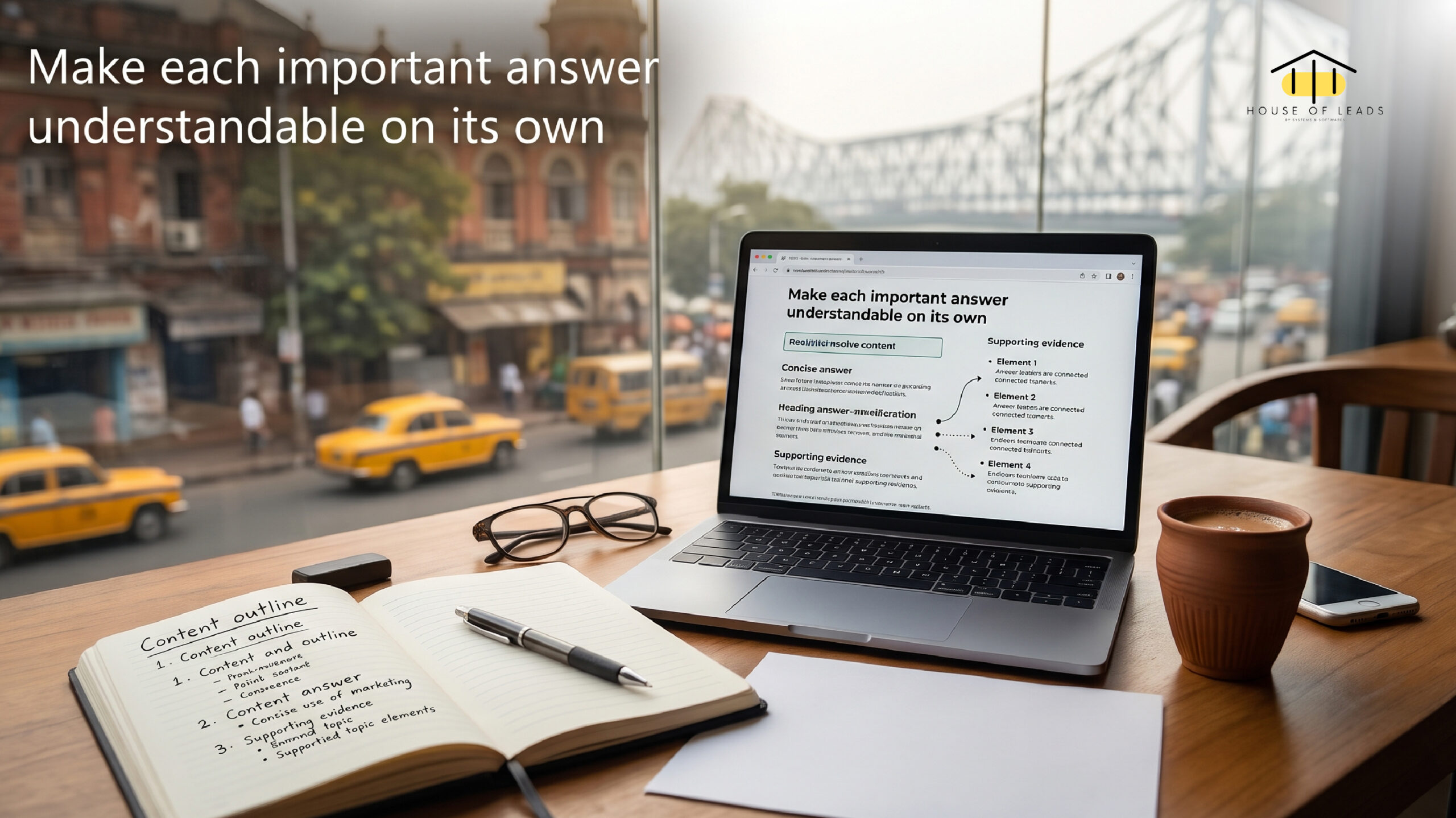
A reader may arrive midway through the page, and an answer system may use a particular passage. Name the subject and include the relevant conditions instead of writing “this works better” without explaining what “this” means.
For example: “House of Leads content writing rates generally range from ₹0.70 to ₹1 per word, with the final scope agreed in the proposal.” That is more informative than “Our pricing is affordable and customised.”
Use tables for genuine comparisons. Use paragraphs to explain why an option fits. Avoid repeating the same answer in an introduction, takeaway list, several headings and eight nearly identical FAQs.
Show who created and checked the information
Give readers a relevant author biography. State whether a named specialist reviewed a technical or medical explanation. Describe the method behind an original result rather than attaching a screenshot without dates.
Google describes E-E-A-T as experience, expertise, authoritativeness and trustworthiness, with trust most important. It also says E-E-A-T itself is not a specific ranking factor. Source: Google people-first content guidance.
A byline is a starting point. The substance still needs to be accurate, useful and honest about what the evidence shows. An author with marketing experience should not be presented as a clinical reviewer.
Keep website access separate from content quality
Your developer should check whether important pages are accessible to the intended search crawlers and whether the website’s settings unintentionally restrict them. This is a technical check; an attractive article alone cannot confirm crawler access.
OpenAI’s publisher guidance says OAI-SearchBot should not be blocked if publishers want content included in ChatGPT summaries and snippets. It distinguishes this search access from GPTBot controls for potential training. Source: OpenAI publisher guidance.
Have the developer verify the actual settings rather than copy a blanket robots.txt file. Access supports discovery; it does not guarantee that a page will be selected for a particular response.
Measure citations clicks and enquiries separately
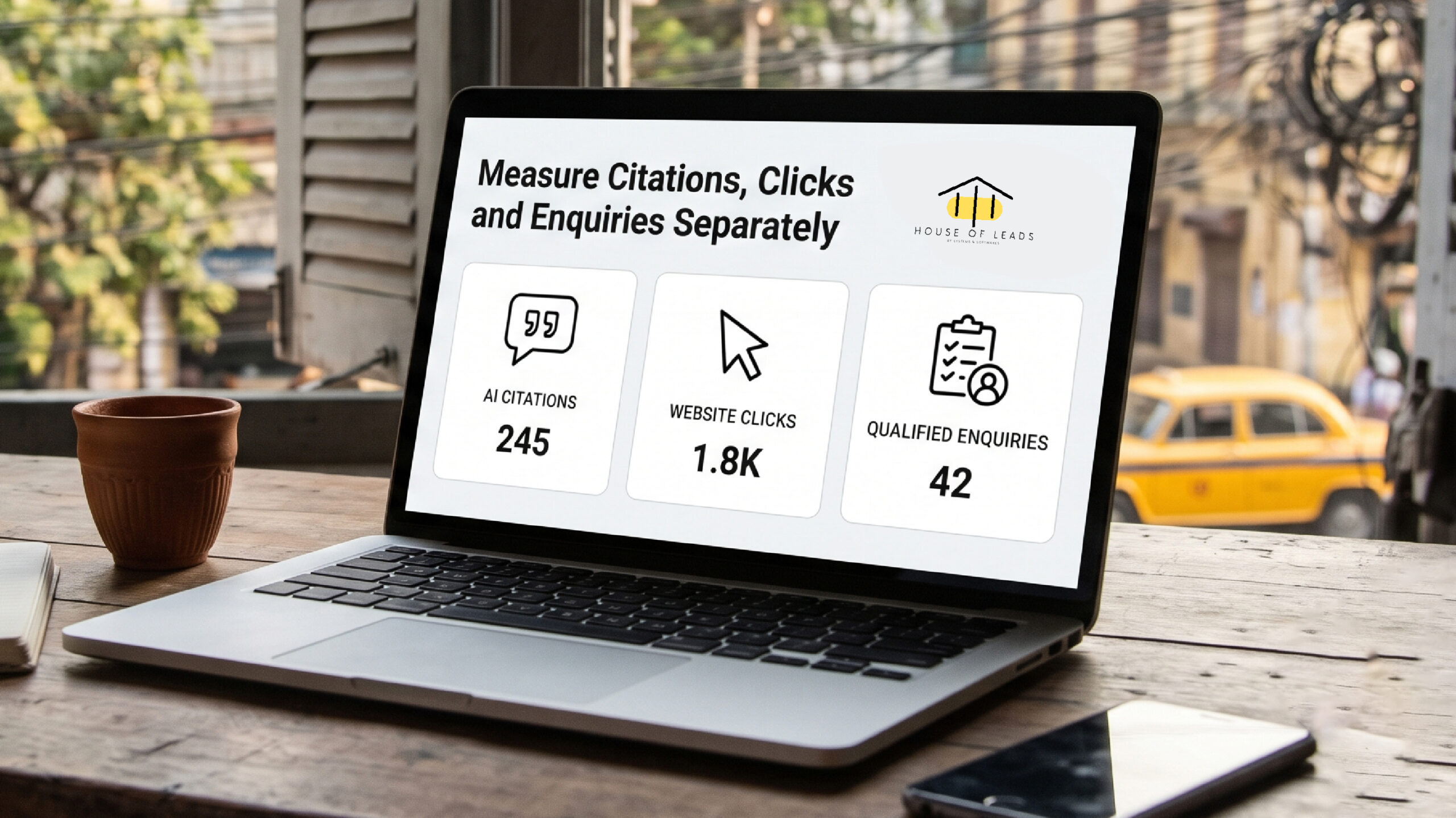
On 10 February 2026, Bing announced AI Performance in Bing Webmaster Tools in public preview. The feature reports citations, cited pages and sampled grounding queries across supported AI experiences. These figures do not represent all AI platforms or a universal ranking score. Source: Bing announcement.
For manual checks, record the prompt, platform, date, relevant market context and cited URL. Repeat a consistent set of questions while recognising that responses may change. Treat the observations as a sample, not proof of complete market visibility.
Track visits and enquiries separately. OpenAI states that ChatGPT referral URLs include utm_source=chatgpt.com, which can help analytics attribution. Source: OpenAI publisher guidance. A referral record still needs to be connected with a genuine business action before calling it a lead.
An original calculation that adds useful detail
Illustrative example: a 1,500-word article at ₹0.70 per word costs ₹1,050; at ₹1 per word it costs ₹1,500. Those amounts show the arithmetic using House of Leads’ supplied rate range. They are not a complete quote for every specialised article.
The example becomes useful when it also states the research, review and distribution scope. A number without those conditions may answer a price question incompletely.
Original calculations, transparent scopes and genuine comparisons can make a page useful even when the business has no campaign performance data to publish.
A practical improvement sequence
First, choose a small set of customer questions connected to your offer. Review the existing pages so each question has a suitable destination. Add specific answers, evidence and relevant internal links. Ask the appropriate person to review the facts, then verify access and publish.
After launch, examine search queries, observed citations, referrals and enquiries. Update the page when the offer or supporting information changes. Changing the date alone does not refresh the substance.
House of Leads includes research, strategy, writing, editing, uploading, distribution and reporting within agreed content engagements. Explore our content marketing services in India to build useful content around your customer questions and available evidence.