
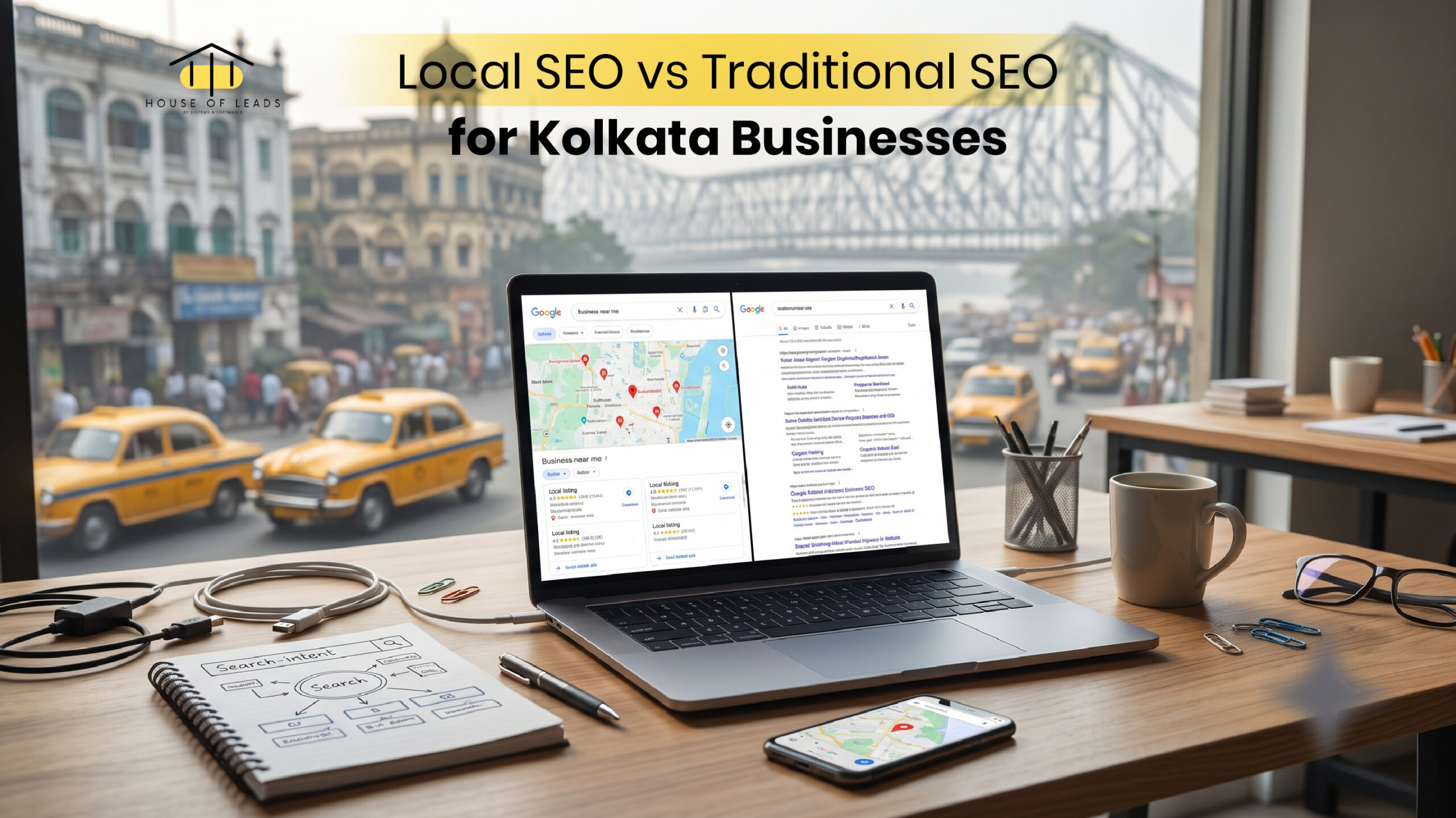
Choose local SEO when customers need to visit you or hire you within a particular area. Choose national or ecommerce SEO when you sell across India. Many Kolkata businesses need both: a useful website for broader searches and a Google Business Profile for nearby discovery.
A restaurant in Park Street and an ecommerce brand shipping from Kolkata have different priorities. The restaurant needs people nearby to find its menu, opening hours and booking details. The ecommerce brand needs shoppers across India to find its categories and products. Paying for the same keyword list would miss those differences.
The right starting question is simple: where are your customers, and what do they need to know before contacting you?
What local SEO means in everyday language
Local search engine optimisation helps people discover a business that serves a particular place. It connects accurate business information, a suitable Google Business Profile and relevant website pages.
Someone searching for “restaurant near me” may need directions immediately. Someone searching for “physiotherapy clinic in Salt Lake” may compare services before booking. Local SEO should help both people find accurate information and take the next step.
Google describes three main local ranking factors: relevance, distance and prominence. Relevance concerns the match to the search; distance concerns location; prominence concerns how well known the business is. An agency can improve your information and visibility, but cannot move your actual location closer to every searcher.
Source: Google Business Profile local ranking guidance
This explains why one search screenshot cannot prove that a business ranks first everywhere in Kolkata.
How traditional website SEO differs
“Traditional SEO” is a convenient term for improving visibility in ordinary website search results. It is not a separate Google product. The work may include fixing inaccessible pages, improving service descriptions, answering customer questions and connecting related pages through useful links.
National SEO extends that work to a wider market. Ecommerce SEO focuses on product discovery, collections, product details and the website issues that can affect large catalogues.
Local SEO still needs website SEO. A Business Profile can help someone discover a clinic, while its website explains the doctor’s qualifications, appointment process and actual services. Neither should carry inaccurate information.
| Decision | Local SEO | National or ecommerce SEO |
|---|---|---|
| Customer geography | Nearby areas or a defined service region | Multiple cities or nationwide |
| Typical search | Bakery in New Town | Buy baking equipment online |
| Important pages | Location and local service pages | Service, collection, product and supporting guides |
| Helpful business action | Call, direction request, booking | Enquiry, demo request, purchase |
| Main reporting question | Are relevant nearby customers contacting us | Are relevant buyers across the market finding us |
A practical starting point for six business types
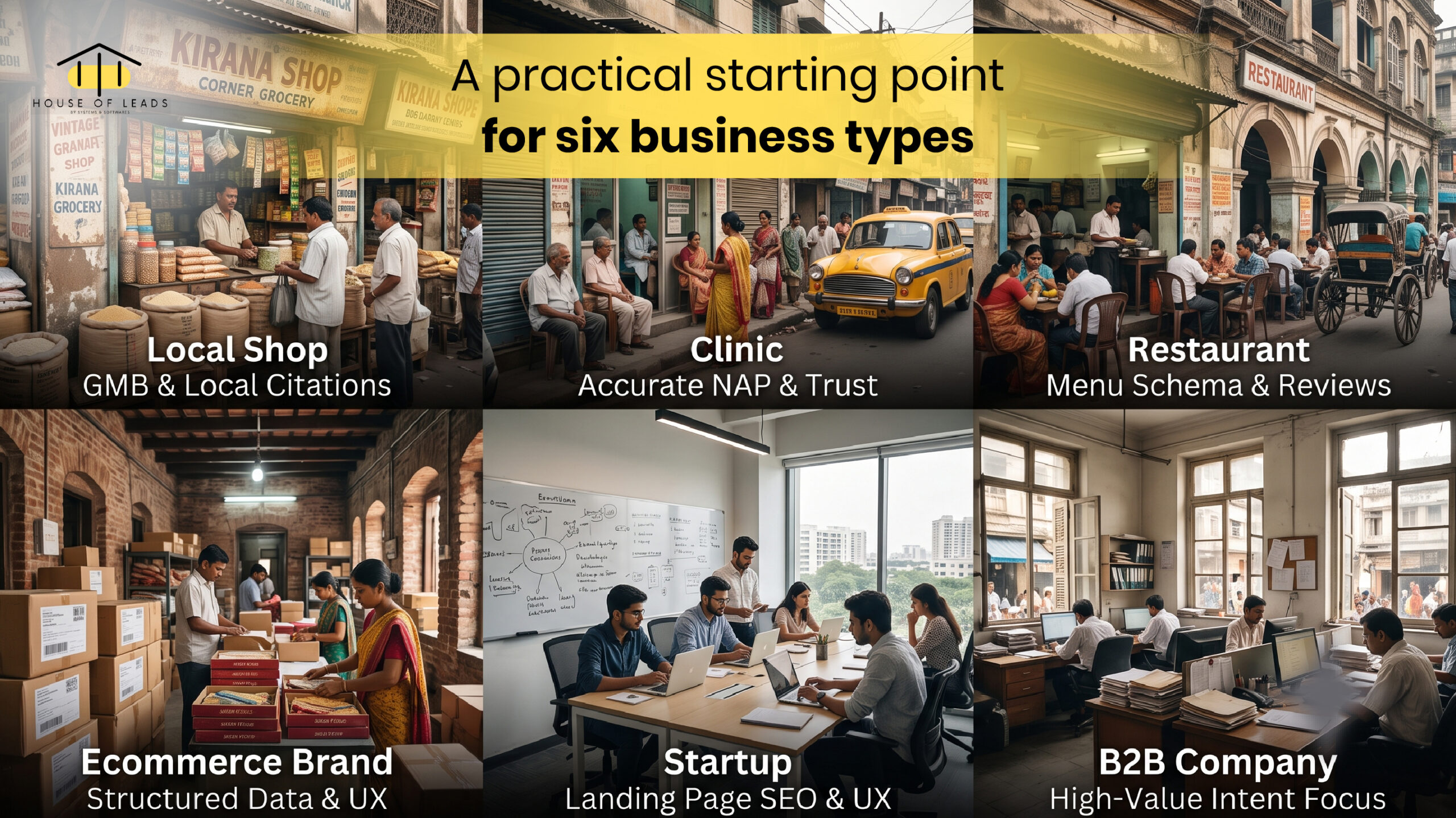
The following recommendations are examples, not accounts of House of Leads client results.
| Business | Sensible starting priority | Supporting content |
|---|---|---|
| Local shop | Accurate Business Profile and product or service information | Availability, directions and common buying questions |
| Clinic | Local discovery and accurate service pages | Clinician-reviewed patient information and appointment guidance |
| Restaurant | Profile, menu, hours and booking route | Cuisine, dietary options and genuine venue information |
| Ecommerce brand | Collection and product pages for its delivery market | Comparisons, buying guides, care and sizing |
| Startup | The audience and geography of its actual offer | Product use cases, pricing explanation and demonstrations |
| B2B company | Service and problem-based searches in its target market | Case evidence, implementation questions and industry explanations |
A startup does not automatically need national SEO. A home-services startup operating only in Kolkata may need local demand first. A software company based in Sector V may sell nationwide and need very little emphasis on neighbourhood searches.
Can one business target several Kolkata areas
Yes, when the business genuinely serves those areas and can explain how. A delivery business might cover Gariahat, Behala and New Town. A clinic with one branch should explain where patients can visit rather than imply that it has branches it does not operate.
Create an area page only when it provides information a customer would find useful. That might include delivery boundaries, travel guidance, service availability or a genuine branch. Changing only an area name across nearly identical pages gives the reader little value.
Language is another practical choice. Ask staff which languages customers use for enquiries, and inspect your actual search queries. Bengali and English content may both be useful, but translating every page without evidence of need can stretch a small budget.
What to fix before commissioning more blogs
Start with the information closest to a purchase. Check the business name, address, phone number, opening hours, offer and contact route. Make sure a person using a mobile phone can understand what you provide and send an enquiry without struggling.
Then review the pages that explain your most important services or products. If a shop has no useful product information, twenty general articles will not resolve that gap. If a restaurant’s menu is outdated, more impressions may simply bring more disappointed visitors.
Only after those checks should the content plan expand into customer questions. Good questions come from sales calls, messages, staff conversations and search data. An owner’s explanation of delivery, product selection or service preparation can become more useful content than another broad “benefits of SEO” article.
Where SEO AEO and GEO fit
SEO helps customers discover pages in search. Answer engine optimisation, or AEO, is commonly used to describe making answers clear and useful. Generative engine optimisation, or GEO, concerns visibility in AI-generated search experiences.
For an owner, these labels should describe practical work: accessible pages, accurate information, helpful explanations and evidence. Google says its existing SEO foundations apply to AI Overviews and AI Mode; no separate special optimisation is required. Source: Google guidance for AI features.
Ask your agency what it will change on your website. A claim that your content follows “the latest algorithm” is less useful than an explanation of which customer questions it will answer and how the work will be checked.
Measure customer actions alongside visibility
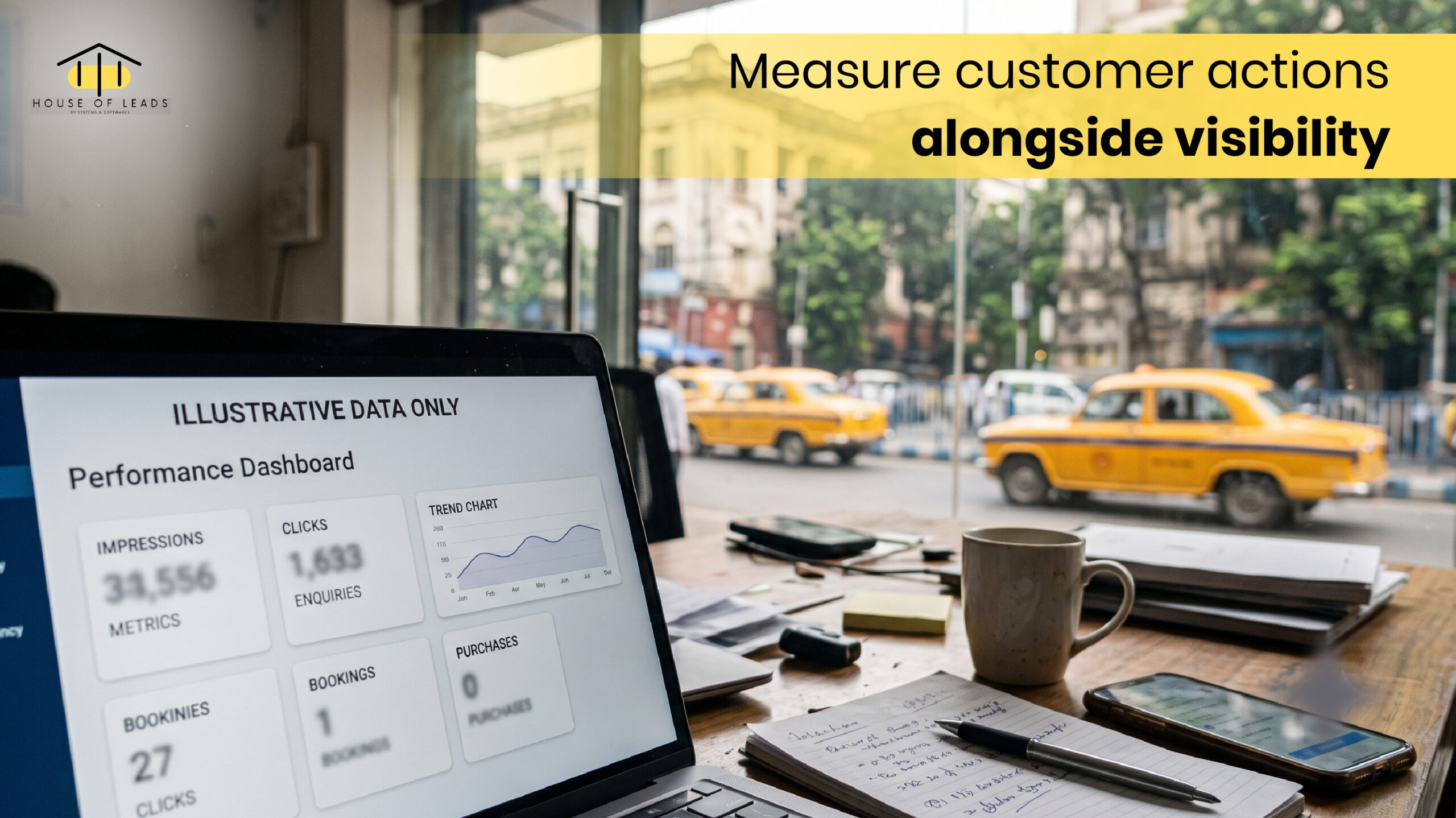
Use a small reporting set that matches the business. Track search impressions and clicks, relevant enquiries, completed bookings or purchases, and the pages helping customers make decisions. Keep Business Profile interactions separate from website actions.
Illustrative example: a shop receives 40 website enquiries in one month and 55 in the next. That is an increase of 15, or 37.5%. Before attributing the change to SEO, check seasonal demand, paid campaigns, duplicate enquiries and whether tracking remained consistent. The calculation alone does not establish the cause.
For local ranking checks, record the search phrase, location, device and date. For ecommerce, compare relevant products and non-branded discovery as well as overall traffic. A useful report explains what changed and what the team will do next.
Choose the strategy around your next customer
If most customers visit or hire you locally, begin with local discovery and clear service information. If customers buy across India, prioritise the pages and questions that support national purchasing. If both are true, agree which part deserves attention first.
House of Leads works with Kolkata businesses across search strategy, website improvement and content. Explore our SEO services in Kolkata to discuss a plan based on your customer geography, current website and available budget.